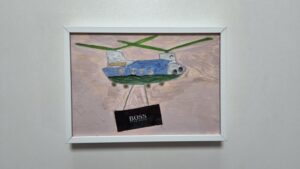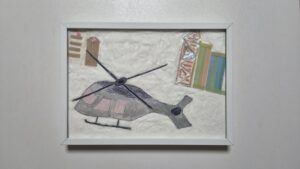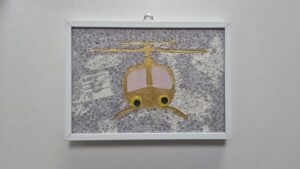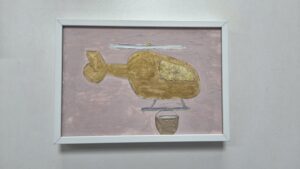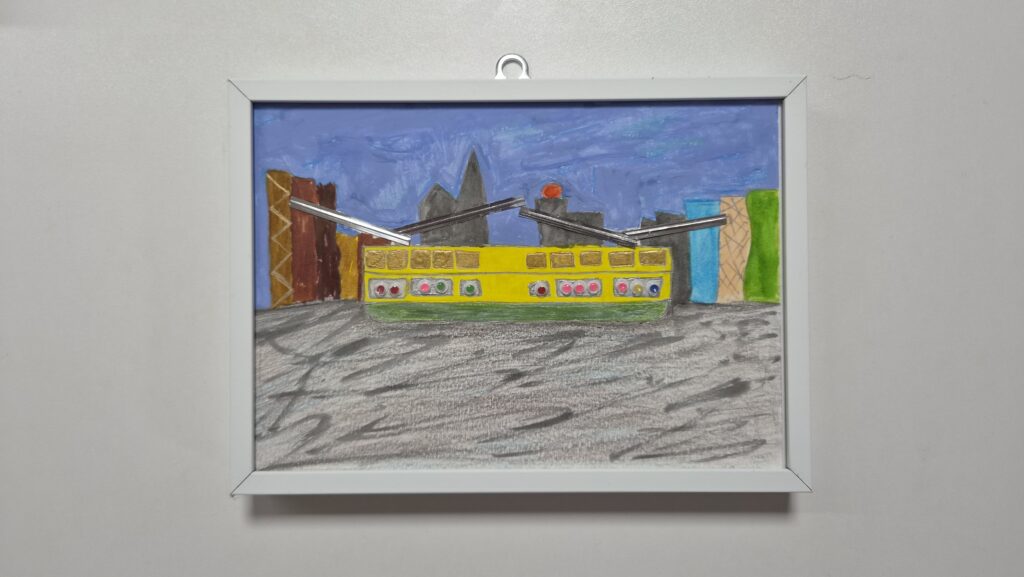
Title: Hide, Hide, or Your Hair Will Show
Created: November 25, 2026
Serial number: BK-2026-09
Dimensions: 210 mm wide × 148 mm high
One undeniable fact is that Britain ruled Hong Kong as a colony for approximately 150 years.
In the years that followed, Hong Kong enjoyed freedom and prosperity. But there was no democracy.
Looking back at history, colonies were never granted even democratic processes, making this, too, a historically rare case.
Discrimination existed in Hong Kong, too.
It could be seen in the two-deck layout of the ferries traveling between Hong Kong Island and the Kowloon Peninsula.
The first deck was a space occupied by British people and the middle class, while the first deck was a space for outsiders and people who were neither Chinese nor Hong Kongers.
The gaze is power.
Anyone could look into the first-deck space from outside.
In other words, the people there had no power.
The second-deck space was not open to everyone’s gaze.
In other words, it was cut off from the outside world.
Yet even the British and Hong Kong people on the second deck could not escape the gaze of the British government and royal family, who could see everything in detail.
Hong Kong was a thoroughly commercial place.
In Korea, apartment buyers must pay for a share of common areas, including the parking lot, even if they don’t use it. In Hong Kong, by contrast, a parking space could be purchased as an option when signing the contract.
There was a strong understanding of supply and demand and of capitalism. It was a place where “Hong Kong-style capitalism” operated, allowing immigrants of different skin colors to pursue shared interests.
It was a free-trade port city where, as long as commercial interests aligned,
anyone could become a colleague, whether British, Chinese, Indian, or Portuguese.
Yet discrimination was always present in Hong Kong in those days, as was power.
Still, it was more vibrant than any other colony of the imperial era, a place of freedom and prosperity.